
Home Inspection Tools
Enhancing Home Inspections with Advanced Technology
Modern home inspections have evolved well beyond a flashlight and a clipboard, especially in a market like New York City where many buildings are older, systems have been modified over decades, and important components are often concealed behind finished surfaces. Buyers are frequently making high-stakes decisions on properties with pre-war construction, mixed materials, shared building systems, and limited access to key areas, all of which increase the likelihood of conditions that may not be immediately visible during a basic walk-through. At Home Inspections NYC, inspection tools and technology are used intentionally to support the visual inspection process, improve documentation, and provide clearer insight into observed conditions at the time of inspection, while remaining fully within New York State’s visual inspection standards.
Professional inspection tools do not replace experience or judgment. Instead, they support the inspection by helping identify patterns, irregularities, and areas of concern more efficiently and with greater clarity. In dense urban housing, where plumbing and electrical systems may run through multiple units and moisture intrusion can originate far from where damage becomes visible, these tools help narrow uncertainty and reduce guesswork. When used correctly, they allow findings to be explained more clearly and help clients better understand both the condition of the property and the inherent limits of a non-invasive inspection.
Technology also plays an important role in setting realistic expectations. Tools such as thermal cameras, moisture meters, borescopes, and drones can provide valuable information, but they do not offer definitive diagnoses or guarantee that hidden issues are not present. Each tool has specific strengths and limitations that are influenced by access, environmental conditions, and building construction. In New York City, where occupied spaces, restricted areas, weather conditions, and complex building layouts are common, proper tool selection and careful interpretation are essential to maintaining accuracy and professional reliability.
Key Tools and Their Benefits
-
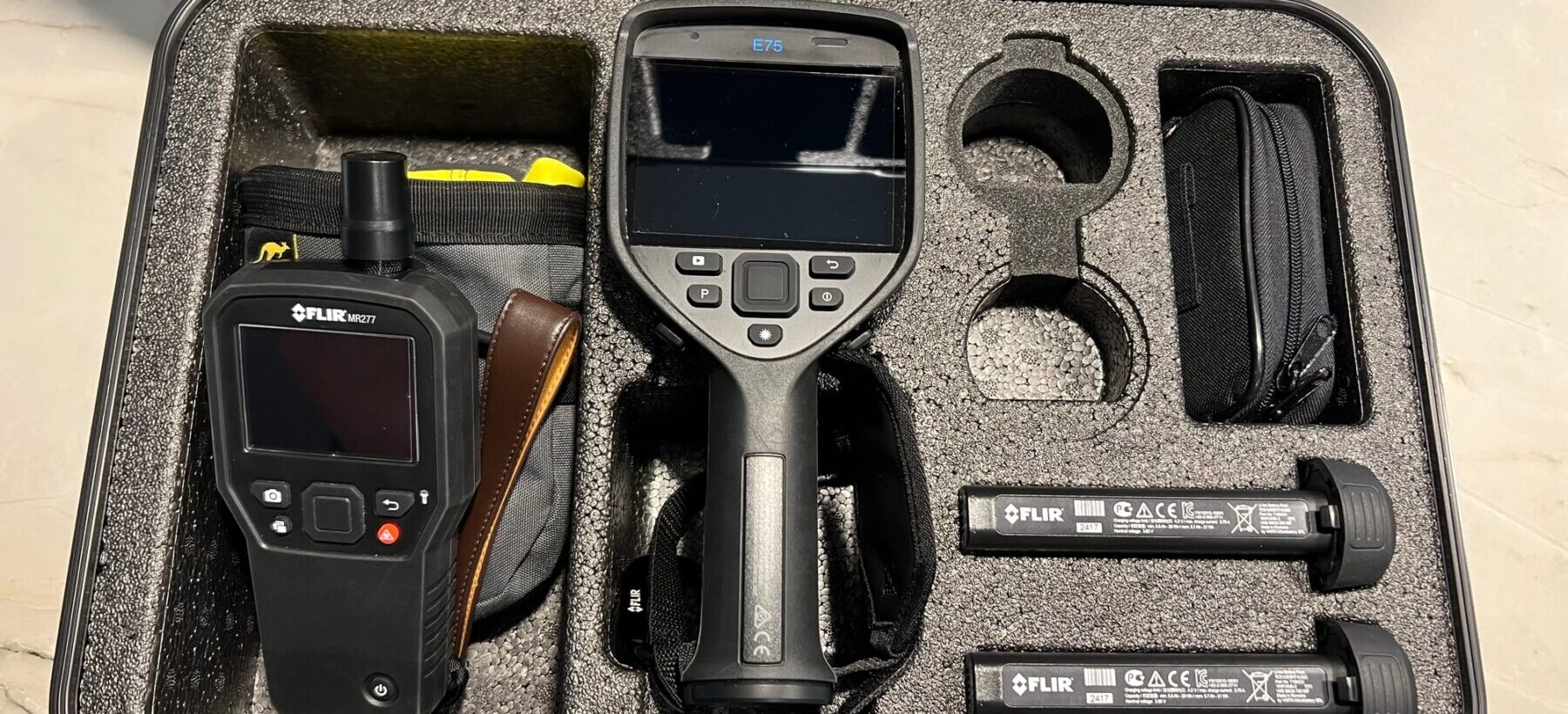
Thermal Cameras: Detect temperature anomalies such as energy loss, overheating components, and concealed water leaks. These tools provide valuable insights into insulation and HVAC performance.
-
Moisture Meters and Hygrometers: Measure moisture levels and humidity in building materials, helping to identify leaks, areas prone to rot, and potential mold growth.
-
Sewer Scopes: Offer real-time visuals of underground plumbing systems to locate blockages, corrosion, or structural damage that might otherwise remain undetected.
-
Electrical Testers: Confirm the safety and functionality of wiring and outlets, identifying issues such as reversed polarity or improper grounding.
-
Drones with High-Resolution Cameras: Capture detailed aerial views of roofs, chimneys, and hard-to-reach exterior areas, ensuring a comprehensive evaluation while maintaining safety.